California Standard Peptides
The research,
sourced.
What the published studies on each compound actually report, where the evidence stops, and how to read the paperwork that comes with a lot. Every summary links its sources.
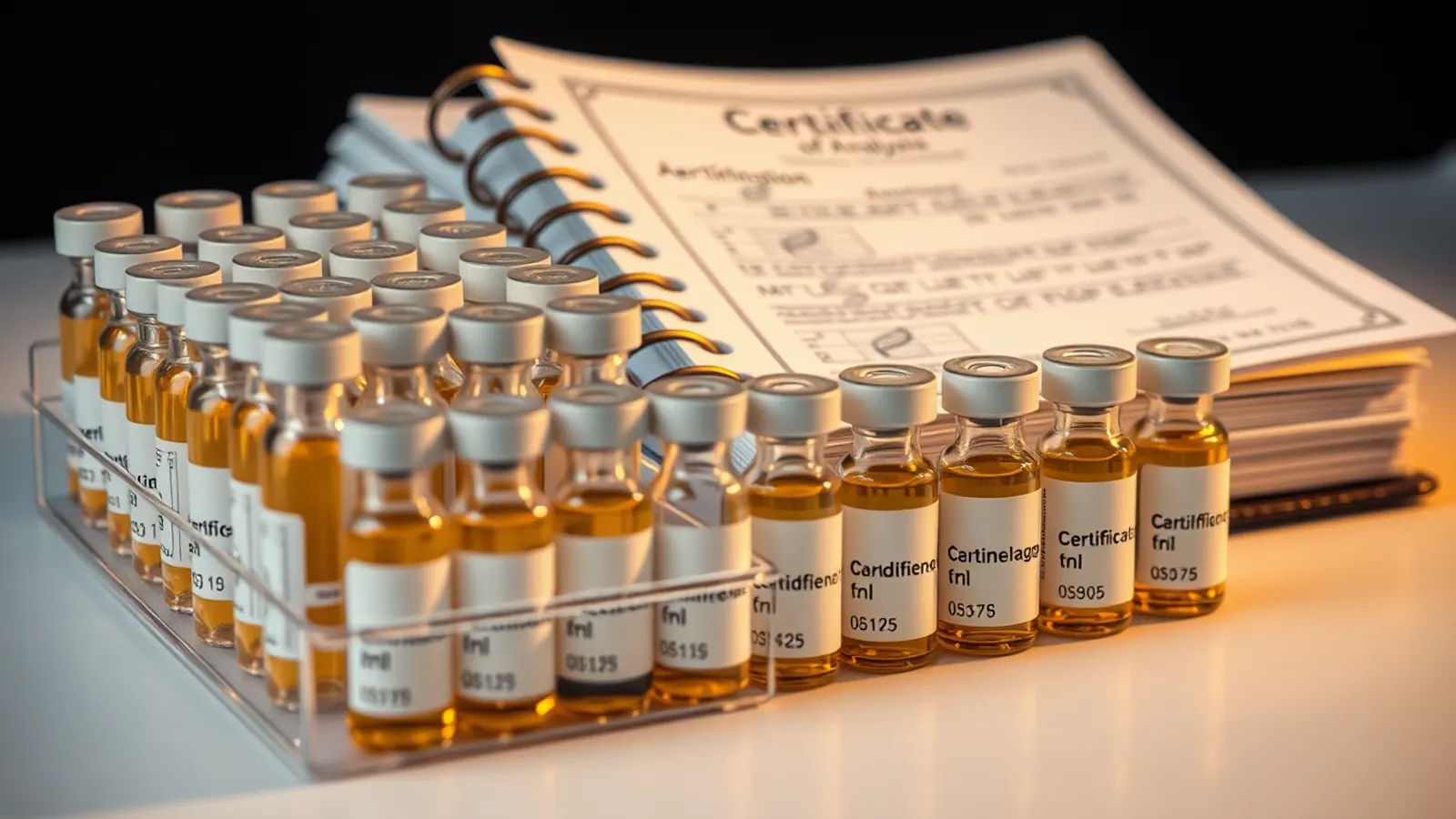
What "Research Use Only" Means: The Label, Its Origins and Its Limits
The words "research use only" appear on almost every reagent, but few people know where they come from or what they commit a supplier to. This guide explains the label, the regulatory idea of intended use behind it, and what a credible RUO supplier does and does not do.

Tirzepatide: Research Peptide Overview
Tirzepatide is a synthetic 39-amino-acid, lipid-conjugated peptide (CAS 2023788-19-2) engineered as a dual agonist of the GIP and GLP-1 receptors, handled in laboratories as a research-grade lyophilized material.

SS-31 Peptide, MOTS-c and NAD+: What Mitochondrial Peptide Research Shows
SS-31, MOTS-c and NAD+ are often grouped as "mitochondrial" compounds, but they sit at very different points on the evidence ladder. Here is what the published studies show, and where they stop.

Semaglutide vs Tirzepatide vs Retatrutide: Structure and Class Compared
This compares three synthetic incretin-class research peptides — Semaglutide, Tirzepatide, and Retatrutide — strictly along structural and chemical lines: receptor classification, peptide class and ba

Semaglutide: Research Peptide Overview
Semaglutide is a synthetic 31-residue GLP-1 receptor agonist analog (CAS 910463-68-2) carrying an Aib substitution at position 2 and a fatty-diacid side chain at Lys26. It is, handled in laboratories as a lyophilized res

Selank and Semax Research Review: What the Studies Show
Selank and Semax are two Russian-developed heptapeptides that share a Pro-Gly-Pro tail but little else. Here is what the published studies report and how far they go.

Retatrutide: Research Peptide Overview
Retatrutide (RETA) is a synthetic 39-amino-acid, lipid-conjugated peptide (CAS 2381089-83-2) classified as a unimolecular GIP/GLP-1/glucagon triple receptor agonist, handled in laboratories as a lyophilized research-grad

Retatrutide + Cagrilintide: Research Peptide Overview
Retatrutide + Cagrilintide is a co-formulated research combination pairing Retatrutide, a 39-residue GIP/GLP-1/glucagon triple-receptor agonist peptide, with Cagrilintide, a 32-residue long-acting amylin analogue. It is,

PT-141 (Bremelanotide): A Receptor Pharmacology and Literature Review
An evidence review of PT-141 restricted to structure and melanocortin receptor pharmacology — what the published literature reports about receptor activation, and where it stops.

Peptide Stability and Degradation: Oxidation, Deamidation and Aggregation
Peptides change over time in predictable chemical ways. This guide explains the main degradation pathways, the conditions that accelerate them and how a laboratory detects them in a lot.
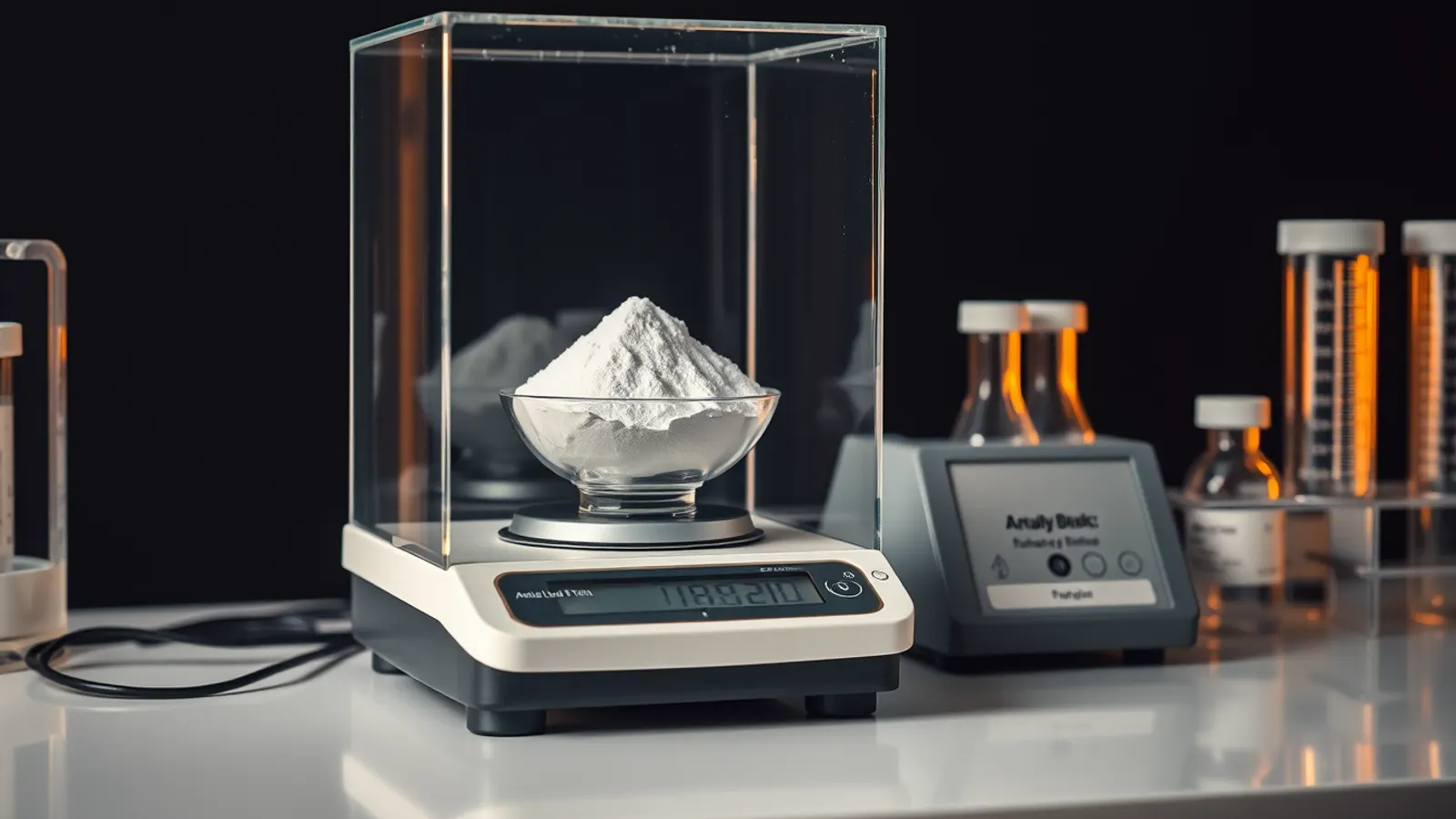
Net Peptide Content vs Purity: Two Numbers That Measure Different Things
HPLC purity and net peptide content are often confused, but they answer different questions. One describes how clean the peptide is; the other describes how much of the powder is peptide at all.

NAD+ Research Review: What the Studies Show, and Where They Stop
NAD+ is a coenzyme, not a peptide, and most of its human literature studies precursors rather than NAD+ itself. This review sorts the biochemistry from the trials and marks where each stops.
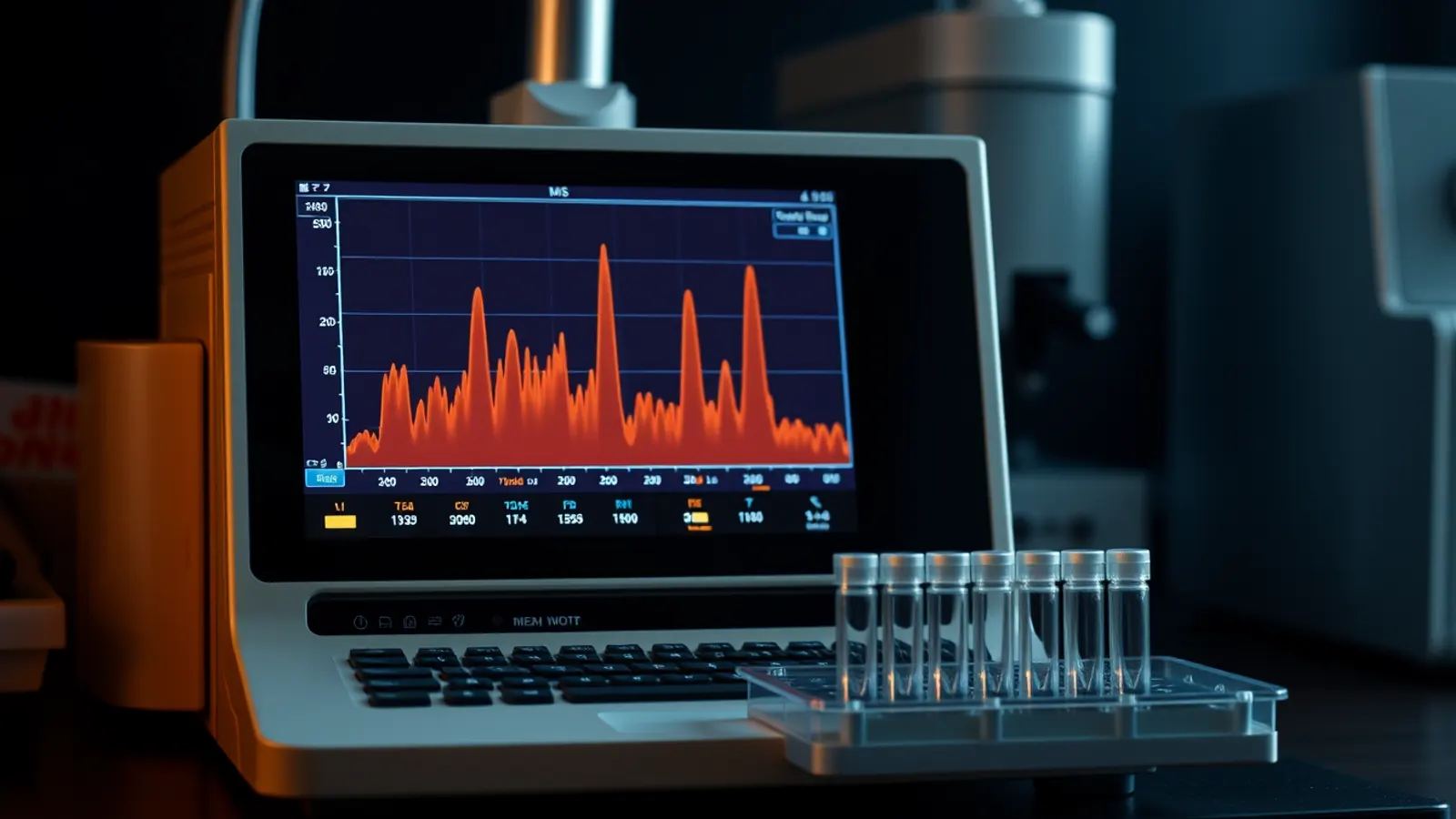
Mass Spectrometry for Peptide Identity: Reading the Spectrum on a COA
Purity tells you how clean a sample is; mass spectrometry tells you whether it is the right molecule. This guide explains ionisation, charge states, mass accuracy and fragment sequencing, and how to read the spectrum on a certificate.

Ipamorelin vs CJC-1295: Two Receptors, Two Evidence Files
The two compounds act on different receptors and have very different evidence files. A study-by-study review of the ghrelin-receptor and GHRH-receptor literature.

Humanin Research Review: A Mitochondrial-Derived Peptide and Its Open Questions
Humanin was found in a screen for factors that protected neuronal cells, and later traced to an open reading frame in mitochondrial DNA. This review covers the primary papers and why two proposed mechanisms remain unreconciled.

HPLC Peptide Purity Explained: How a Chromatogram Measures a Lot
Reversed-phase HPLC is the standard way to measure how much of a peptide sample is the target molecule. Here is how the separation works, how the purity figure is calculated and where the method stops.

How to Spot a Fake Peptide COA: A Lab-Forward Guide
A certificate of analysis is only as good as the lab and the lot behind it. This guide shows what genuine HPLC and mass-spec data look like, and the signs of a fabricated or recycled COA.

GLOW vs KLOW: the CS-GLW and CS-KLW Blends Compared
The two blends differ by one component. This is an evidence review of all four — GHK-Cu, BPC-157, TB-500 and KPV — and of why no study examines either mixture.

GHK-Cu Research: What the Studies Actually Show
A study-by-study review of the published GHK-Cu literature — what was measured, in which model, by whom, and which questions the record does not answer.

Epitalon Research Review: The Telomerase Paper, the Mouse Data and the Gaps
Epitalon is a four-residue peptide with a literature that is mostly cell and rodent work from one group. This review reads the key papers closely and marks what they do not show.

Cagrilintide: Research Peptide Overview
Cagrilintide, also cataloged as AM833, is a synthetic long-acting analogue of human amylin (islet amyloid polypeptide), handled in laboratories as a lyophilized powder. It carries CAS number 1415456-99-3 and a molecular

Bioregulator Peptides: What the Research on Pinealon, Epitalon and Testagen Shows
Short "bioregulator" peptides such as Pinealon and Epitalon have a large literature, but most of it comes from one research group and has not been independently replicated. This review sets out what is reported and how much weight it can bear.

Semaglutide Research: What the Studies Actually Show
Semaglutide is the reference GLP-1 receptor agonist. What the peptide-chemistry, cryo-EM, metabolism and rodent literature actually reports — and why none of it transfers to research-grade material.

Retatrutide Research: What the Studies Actually Show
Retatrutide (LY3437943) engages three incretin-class receptors with one peptide. What the receptor-pharmacology, peptide-design, and rodent literature reports — and why reviewers still call it investigational.

Tirzepatide Research: What the Studies Actually Show
Tirzepatide is a 39-residue dual GIP/GLP-1 receptor agonist. What the cryo-EM, biased-agonism, and islet-model studies report about how it works at the receptor — and what that literature does not establish.

Cagrilintide Research: What the Studies Show
A plain-language review of the published cagrilintide literature — how a lipidated amylin analogue is built, what receptor-pharmacology work describes, and what the research has not established.

GLP-1 Signaling Biology: Gut Hormones and Appetite Pathways in Research
GLP-1 signaling biology as described in the research literature — how gut hormones like GLP-1, hypothalamic circuits, and insulin regulate energy balance and appetite.

What Is a GLP-1 Receptor Agonist? A Science Explainer
A GLP-1 receptor agonist is a molecule that activates the GLP-1 receptor. A complete educational explainer of the receptor pharmacology concept and its limits.

How GLP-1 Pathway Research Is Framed: An Explainer
An educational explainer of how research describes the GLP-1 signaling pathway at a mechanism level, and the strict limits of that description.

Retatrutide vs Tirzepatide vs Semaglutide: A Receptor-Level Comparison for Researchers
Single-agonist (semaglutide), dual-agonist (tirzepatide), and triple-agonist (retatrutide) — what those terms actually mean at the receptor level, side by side.