What "Research Use Only" Means: The Label, Its Origins and Its Limits
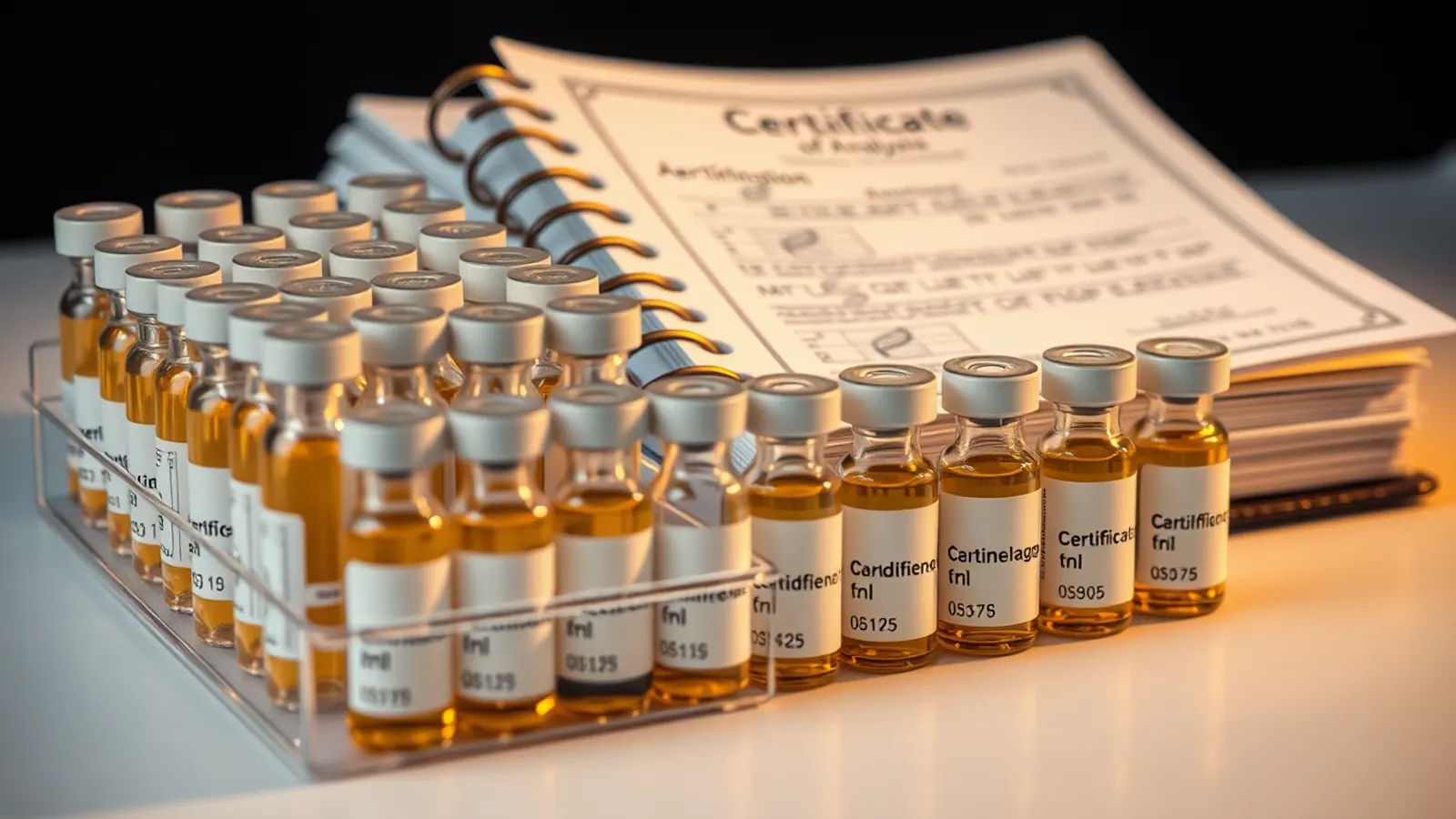
What does research use only mean? The phrase appears on antibodies, enzymes, cell-culture media, analytical standards and research peptides alike, usually in small print. It is easy to read as boilerplate, but it describes something specific: a product supplied for laboratory investigation, not represented as a drug, diagnostic, food, supplement or cosmetic. This guide explains where the research use only label comes from, the regulatory idea of "intended use" that gives it meaning, and what the label should commit a supplier to in practice.
This article is general background, not legal advice. Regulations differ by jurisdiction and by product type, and anyone with a specific compliance question should consult a qualified professional.
Where the "research use only" wording comes from
In the United States the exact phrase has a formal home in the labelling rules for in vitro diagnostic products. Under 21 CFR 809.10(c)(2)(i), a diagnostic product still in the laboratory research phase of development, and not represented as an effective diagnostic, must carry the prominently placed statement "For Research Use Only. Not for use in diagnostic procedures." A neighbouring provision covers products shipped for investigational testing, which carry "For Investigational Use Only" instead.
The FDA later published guidance on how those labels are used, Distribution of In Vitro Diagnostic Products Labeled for Research Use Only or Investigational Use Only (final guidance, November 2013). Its central point is that the label must reflect how a product is actually distributed and promoted. A product labelled for research use only but marketed for clinical diagnostic use is, in the agency's view, not really a research-use-only product.
Research peptides are not diagnostic kits, and that specific regulation is not written for them. But the wording and the principle behind it have been adopted across the life-science reagent industry, and the same principle is what makes the label meaningful for peptides.
The idea that matters: intended use
US drug law looks at what a product is intended for, not only at what its label says. The FDA's regulation on the meaning of intended uses for drugs, 21 CFR 201.128, explains that intended use is determined by the objective intent of the people responsible for labelling the product, which can be shown by labelling claims, advertising and the circumstances surrounding its distribution.
The practical consequence is simple. An RUO statement on a vial does not, by itself, make a product a research reagent. What a supplier says and does around the product counts too. Product pages that suggest amounts to take, routes of administration, expected personal effects or before-and-after outcomes describe an intended use that contradicts the label. A genuine research-use-only supplier keeps its labelling, its website, its marketing and its customer communications consistent with laboratory use.
What research use only means for a supplier
For a peptide supplier, taking the label seriously shapes almost every page it publishes:
- No usage guidance. No amounts, schedules, administration routes or preparation instructions aimed at personal use.
- No therapeutic or personal-effect claims. Descriptions summarise what published research has studied, mostly in cell and animal models, and where that evidence stops.
- Clear status statements. The product is described as a research compound, not as a drug, food, dietary supplement or cosmetic, and not as approved for any human use.
- Documentation that supports research. Researchers need to know what is in the vial. Lot-specific certificates with identity and purity data are part of what makes a reagent usable in an experiment.
Our own catalogue entries follow that pattern. A listing such as Selank describes the compound, the research areas it has been studied in and the analytical characterisation of the lot, and stops there.
What research use only means for a researcher
From the buyer's side, RUO describes the setting the material is meant for: in-vitro experiments, analytical work and, where applicable, animal studies conducted under the oversight a research institution normally provides, such as an institutional animal care and use committee. Studies involving people are a separate regulatory world, with ethics review and, for investigational drugs, their own requirements; a research reagent is not a substitute for material made and released for clinical use.
RUO also implies standard laboratory practice: handling by trained personnel, appropriate storage, record-keeping of lot numbers so results can be traced to the material used, and disposal according to institutional rules.
What the label does not mean
| Common assumption | What RUO actually indicates |
|---|---|
| "It is a lower grade of the same medicine." | It is a research reagent with no approved human use; it has not been made or released as a medicine. |
| "The label is a formality." | Intended use is judged from labelling, promotion and distribution together, not the label alone. |
| "RUO means the quality is unknown." | Quality depends on the supplier's characterisation of each lot; a good certificate documents identity and purity. |
| "RUO products are FDA approved for research." | There is no FDA approval for research reagents; the label signals the product is not approved for clinical use. |
Why documentation is part of the research-use promise
If a material is genuinely for research, the researcher needs to be able to describe it in a methods section. That means knowing its identity, its purity and the lot it came from. The analytical side of that is covered in our guides to HPLC peptide purity, mass spectrometry for peptide identity and net peptide content vs purity. Knowing how the material behaves over time matters too, which is the subject of peptide stability and degradation.
A research-use-only label paired with no certificate, a generic certificate or a document that cannot be traced to a laboratory leaves the researcher unable to say what was used. Our guide on how to spot a fake peptide COA explains how to check whether a certificate is genuine.
How California Standard applies the label
Everything we list, from BPC-157 to our analytical guides, is written for laboratory research. We publish summaries of the literature and of each lot's analysis, not instructions or personal-effect claims. Each lot's certificate states its measured purity and identity and is available before you pay, because a research reagent is only as useful as the documentation behind it.
Frequently asked questions
What does "for research use only" mean?
It indicates a product supplied for laboratory investigation and not represented or approved for clinical, diagnostic, food, supplement or cosmetic use. In US diagnostic-product rules it is a formal labelling statement under 21 CFR 809.10.
Is a research use only label just a disclaimer?
No. Regulators look at intended use, judged from labelling, advertising and the circumstances of distribution. A supplier whose marketing describes personal use contradicts its own RUO label.
Are research use only peptides FDA approved?
No. Research reagents are not approved for human use. The label signals exactly that.
What should an RUO supplier provide?
Accurate descriptions without usage guidance or effect claims, clear research-only status statements, and lot-specific certificates documenting identity and purity.
See it in the catalogue: BPC-157 with its lot certificate.
For laboratory research use only. Products sold by California Standard Peptides are not drugs, foods, supplements or cosmetics and are not for human or veterinary use. This article summarises published literature; it is not medical advice and not a usage guide.