
Sprays
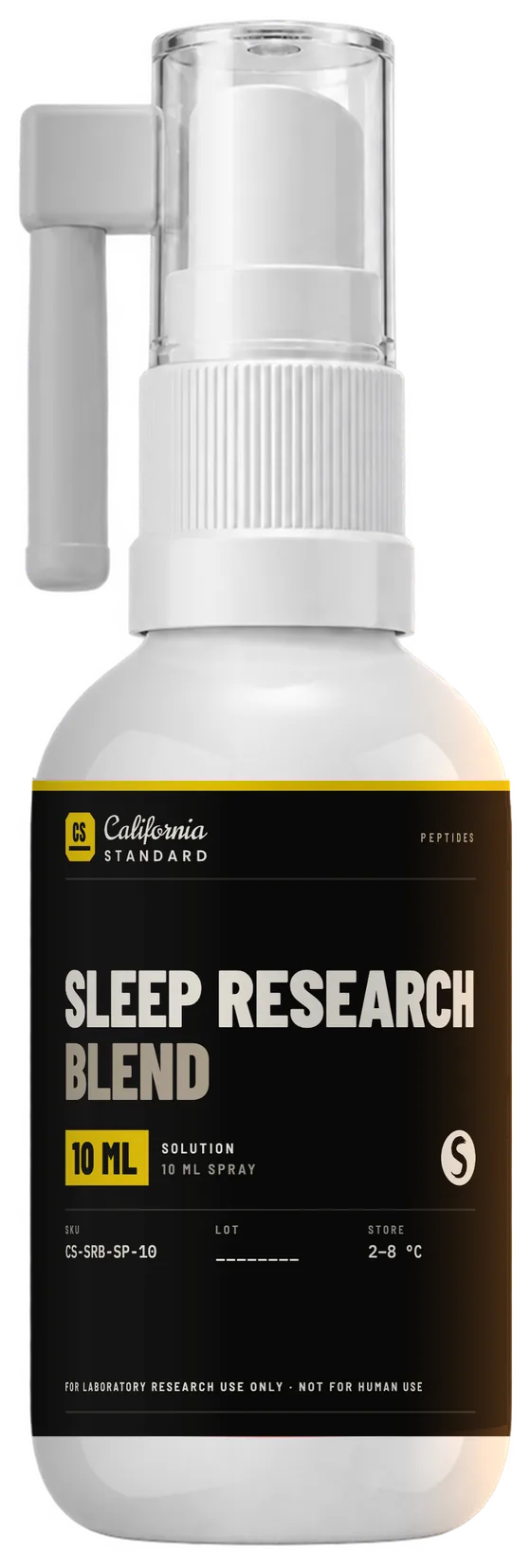
Sleep research blend spray
A spray containing DSIP, Pinealon, melatonin and GABA. The four are studied separately and differ widely in how much human evidence exists; this listing summarises each component rather than any combined effect.
- Container
- 10 mL spray bottle, pump and overcap
- Storage
- 2 to 8 °C, protect from light
- In the vial
- DSIP 10 mg + Pinealon 10 mg + melatonin 50 mg + GABA 250 mg
- Per bottle
- DSIP 10 mg · Pinealon 10 mg · melatonin 50 mg · GABA 250 mg
- Paperwork
- Lot certificate (HPLC + mass spec) shown before you pay
What researchers study it for
- Sleep and EEG delta activity in animals
- Chronic insomnia in small human trials
- Oxidative stress in cultured neurons
- Prenatal hyperhomocysteinemia in rats
- Chronic insomnia
How it is thought to work
DSIP: The mechanism is not established. Pinealon: The mechanism is not established. Melatonin: Melatonin activates two high-affinity G protein-coupled receptors, MT1 and MT2; this is well established. GABA: As an endogenous transmitter, GABA gates GABA-A receptors, chloride-selective channels that mediate neuronal inhibition; this is well established.
Where the research stands
Blend of research compounds. Each component is studied separately; as a combined vial it has no dedicated published research. The least-established component is DSIP: small older human studies; not an approved medicine.
Sources
- Schoenenberger GA, Monnier M. (1977). Characterization of a delta-electroencephalogram (-sleep)-inducing peptide. Proceedings of the National Academy of Sciences of the United States of America.
- Graf MV, Kastin AJ. (1984). Delta-sleep-inducing peptide (DSIP): a review. Neuroscience and Biobehavioral Reviews.
- Khavinson V, et al. (2011). Pinealon increases cell viability by suppression of free radical levels and activating proliferative processes. Rejuvenation Research.
- Arutjunyan A, et al. (2012). Pinealon protects the rat offspring from prenatal hyperhomocysteinemia. International Journal of Clinical and Experimental Medicine.
- Liu J, et al. (2016). MT1 and MT2 Melatonin Receptors: A Therapeutic Perspective. Annual Review of Pharmacology and Toxicology.
- Choi K, et al. (2022). Efficacy of melatonin for chronic insomnia: Systematic reviews and meta-analyses. Sleep Medicine Reviews.
- Sigel E, Steinmann ME. (2012). Structure, function, and modulation of GABA(A) receptors. The Journal of Biological Chemistry.
- Boonstra E, et al. (2015). Neurotransmitters as food supplements: the effects of GABA on brain and behavior. Frontiers in Psychology.
For laboratory research use only. Not a drug, food, supplement or cosmetic; not for human or veterinary use. Nothing on this page is medical advice or a usage guide.