
Research peptides
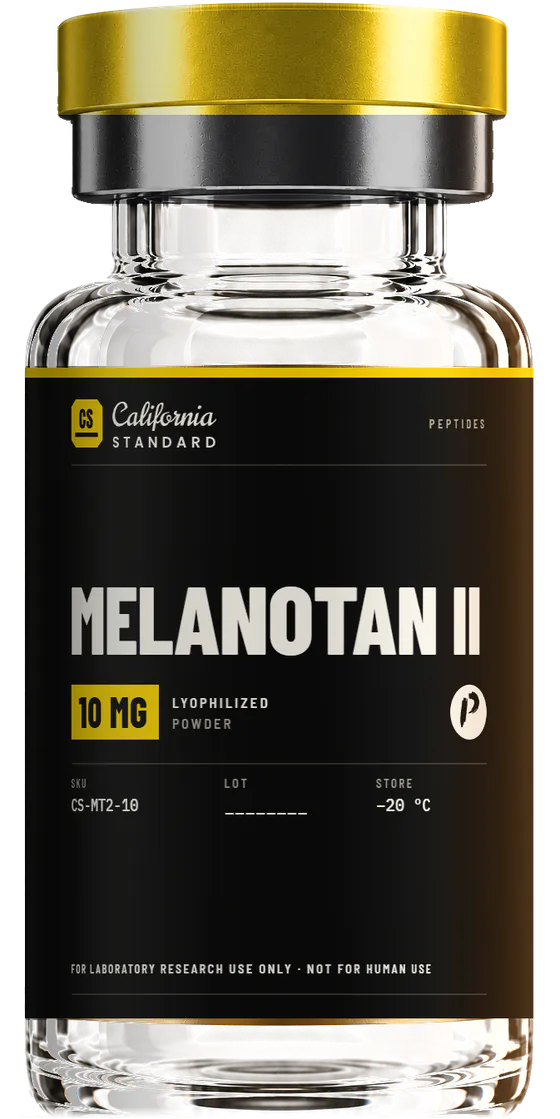
Melanotan II
Melanotan II is a synthetic cyclic heptapeptide analogue of alpha-melanocyte-stimulating hormone, closed by a lactam bridge, developed at the University of Arizona. It is a truncated, cyclized relative of Melanotan I.
- Container
- Glass vial, crimp seal, flip-top cap
- Storage
- -20 °C, desiccated, protect from light
- Paperwork
- Lot certificate (HPLC + mass spec) shown before you pay
What researchers study it for
- Skin pigmentation
- Erectile function in men
- Melanocortin receptor pharmacology
- Adverse-event case reports from unlicensed use
How it is thought to work
Melanotan II is a non-selective melanocortin receptor agonist. Its pigmentation effect is attributed to stimulation of melanocytes. Small placebo-controlled studies also reported erections, nausea and yawning, indicating actions beyond the skin. The sources opened here do not settle which receptor subtypes are responsible for each effect.
Where the research stands
Small early human studies; unlicensed. Human data come from a pilot phase I study and small crossover studies published between 1996 and 2000. It is unlicensed; case reports describe melanoma and other serious events in users, and FDA lists it among bulk substances that may present significant safety risks in compounding.
Sources
- Dorr RT, et al. (1996). Evaluation of melanotan-II, a superpotent cyclic melanotropic peptide in a pilot phase-I clinical study. Life Sciences.
- Wessells H, et al. (2000). Melanocortin receptor agonists, penile erection, and sexual motivation: human studies with Melanotan II. International Journal of Impotence Research.
- Hadley ME, Dorr RT. (2006). Melanocortin peptide therapeutics: historical milestones, clinical studies and commercialization. Peptides.
- Hjuler KF, Lorentzen HF. (2014). Melanoma associated with the use of melanotan-II. Dermatology.
For laboratory research use only. Not a drug, food, supplement or cosmetic; not for human or veterinary use. Nothing on this page is medical advice or a usage guide.